
A Quiet Side Path That Leads to the Strongest Memory
Wandering down a quiet side path with no destination sharpens the senses‚ slows time down and turns small details into lasting memories.
Choosing to Walk Without a Destination
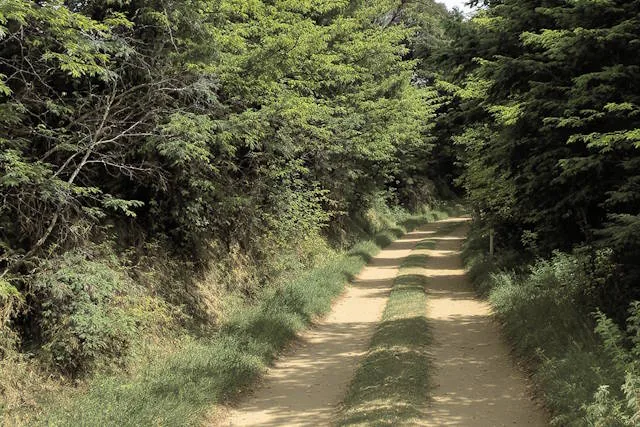
There is something liberating about walking a path that has no name or sign. The moment the first step is taken without a plan‚ a new possibility opens up - not just to arrive but to truly see. When you do not know where you are going‚ every detail becomes more meaningful: the smell of old wood‚ a wall with a faded painting‚ an open window with the sound of distant music drifting out. It is a space where curiosity replaces the goal and the walk itself becomes the heart of the experience.
The Effect of Quiet on the Senses
A side path offers a quiet space that disconnects you from the noise of the city. It lets the small sounds be heard - a breeze among the leaves‚ the trickle of water‚ a soft step on damp earth. When there is no need to defend yourself against the bustle‚ the senses sharpen and the breath slows. This quiet is not just the absence of sound but the presence of peace. It lets the memory sink in more deeply‚ almost like an inner echo of a perfect moment captured in time.
Choosing a New Look at Everyday Life
A side path is like another version of a familiar city. It reveals the simple‚ unpolished layer of daily life: laundry hanging between houses‚ rusty fences‚ a small garden someone tends with love. It is precisely the distance from the lively center that lets you see what is authentic. This is where beauty shows itself in simplicity - not in big buildings or glittering lights but in the small details that make up the essence of life.
The Effect of Light and Shadow on the Sense of Time
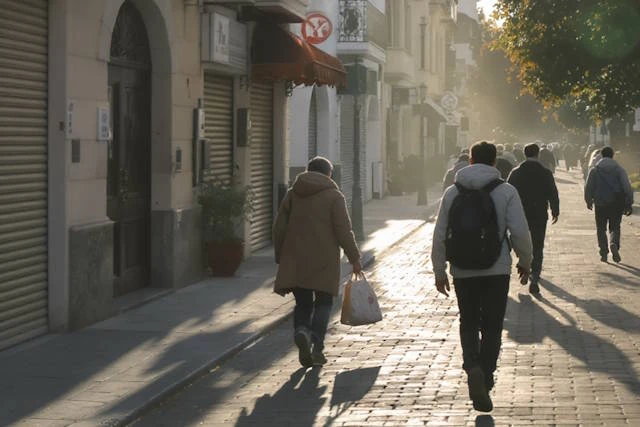
On a narrow path the sun plays a different role. Its rays break through the trees at shifting angles‚ casting patches of light and shade that move along with the walkers. As the hours pass‚ the path changes - the course of the sun creates a slower‚ almost dreamlike sense of time. It is a way in which nature and architecture merge into a complete sensory experience that reminds us how flexible our perception of time is and how much it depends on how we look.
Choosing a Pause in the Middle of Movement
One of the secrets of a side path is the chance to stop without anyone noticing. To sit on a stone‚ lean against a wall and watch a world that moves at a different pace. A pause like this lets you catch fleeting moments - a passerby's glance‚ a child running after a ball‚ a cat hiding in the shadows. These moments‚ which were never part of a plan‚ sometimes become the clearest memories of all‚ the kind that can never be recreated.
The Effect of Emotional Distance from the Familiar
On an unfamiliar path the sense of familiarity disappears and the heart opens. Without the expectations attached to a well-known place‚ every sight becomes a discovery. It is an experience that links a feeling of detachment with full presence. There is no need to understand everything‚ only to be. It is precisely the distance from the familiar that lets you feel the place more intensely - not through the intellect but through feeling. This is the path where time stops for a moment and the experience becomes part of whoever walks it.
Choosing a Place Where the Story Tells Itself
Not every side path leads to a famous destination‚ but almost every one of them leads to a story. Sometimes it is a hidden garden‚ sometimes an old courtyard or a view that suddenly opens up. But the real story is the one born along the way - the imagination that pictures the residents‚ the curiosity that tries to guess who walked here before you‚ or the feeling that you have discovered something no one else has seen. It is a space where reality and imagination blend without getting in each other's way.
The Effect of Movement on Memory
Human memory is built from movement - the sound of footsteps‚ the sense of rhythm‚ the way the light changes with every turn. When you walk a side path‚ every such cue is absorbed and shaped in memory into a complete experience. Walking is not just moving from place to place but creating an emotional route. Years later it is hard to remember exactly what you saw‚ but the feeling - that calm‚ that quiet‚ that moment when everything came together - stays alive and clear.
Choosing Personal Time in a Public Space
On a side path a sense of privacy appears even in the middle of a busy city. It is a place where you can think‚ dream or simply be. The open space suddenly becomes an inner space - one where thoughts become clear and the mind settles. Perhaps that is why paths like these stay etched in memory - they offer a rare moment of calm in a world that is always rushing ahead.
The Effect of Reaching the End of the Path
When the path ends‚ a sense of completion sets in. Not because you have reached a set destination but because this small journey managed to touch you. Sometimes the end is an opening onto a surprising view‚ and sometimes it is just a return to the main street - but either way something changes in the way you see your surroundings. The path‚ which was almost invisible‚ has become a meaningful moment‚ one that becomes part of your personal memory of the place.
Summary
A quiet side path that leads to the strongest memory is a reminder that unplanned moments are sometimes the deepest. These are the places where silence speaks in place of words‚ where time slows down and the heart is open to take in everything around it. On every trip‚ in every city‚ there is one path like this waiting to be discovered - not to get you somewhere‚ but to let you experience yourself in the world through it.